Aspartame Risks: What the WHO Decision Means | Hydrate Heroes
Discover the hidden aspartame risks in sports drinks, the 2023 WHO classification, and why clean-label hydration is vital. Make the healthy switch today.
During my years as a personal trainer and later consulting for major retail shelves like GNC, Publix, and 7-Eleven, I reviewed thousands of nutritional labels. Clients would proudly show me their zero-calorie powdered drink sticks and neon sports beverages, assuming "zero sugar" meant clean wellness. I had to look them in the eye and explain that swapping cane sugar for chemical sweetening agents introduced a whole new set of health questions. In mid-2023, the global conversation surrounding aspartame risks took a dramatic turn when the world's leading public health body officially categorized the ubiquitous sweetener, confirming what functional health advocates had suspected for years.
Whether you are an athlete or simply striving to stay hydrated during an intense workday, understanding what goes into your shaker cup is non-negotiable. With the Make America Healthy Again (MAHA) movement shining a long-overdue spotlight on ultra-processed formulations, it is time to examine the scientific evidence behind aspartame and re-evaluate our standards for clean-label supplementation.
Quick Facts: What You Need to Know About Aspartame and Hydration
- The 2023 Milestone: The World Health Organization's International Agency for Research on Cancer (IARC) classified aspartame as "possibly carcinogenic to humans" (Group 2B).
- Gut and Metabolic Disruption: Emerging research reveals artificial sweeteners can alter the delicate human microbiome, potentially impacting glucose tolerance.
- The Hydration Irony: Many popular electrolyte packets claim to promote wellness while carrying synthetic sweeteners, chemical emulsifiers, and artificial food dyes.
- A Clean Path Forward: True daily replenishment does not require synthetic shortcuts or extreme sodium levels. Pure plant extracts and mineral sea salt can deliver superior refreshment.
The 2023 WHO Classification: Why Regulators Are Sounding the Alarm
For decades, mainstream beverage corporations defended aspartame by pointing to historical approvals from global agencies. However, in July 2023, the International Agency for Research on Cancer (IARC) alongside the Joint FAO/WHO Expert Committee on Food Additives (JECFA) concluded an exhaustive independent safety review. The IARC designated aspartame as a Group 2B carcinogen, meaning there is evidence linking it to cancer—specifically hepatocellular carcinoma—in experimental models and limited human data.
While industrial lobbyists quickly downplayed the findings by pointing out acceptable daily intake thresholds, the shift was unmistakable. Health-conscious consumers immediately recognized that a cumulative chemical burden accumulates across diet sodas, protein powders, chewing gums, and hydration packets. When evaluating aspartame risks in everyday beverages, we must ask ourselves: why accept a possible carcinogen in a product specifically purchased to improve health?
Understanding the Science: What Are the Aspartame Risks?
The debate over artificial sweeteners goes far beyond individual classifications. Aspartame breaks down in the gastrointestinal tract into phenylalanine, aspartic acid, and small amounts of methanol, which further metabolizes into formaldehyde. For the average consumer looking for daily wellness, these chemical reactions provide zero nutritional benefit while placing an unnecessary metabolic demand on the body.
Furthermore, recent peer-reviewed research highlights systemic issues with non-nutritive sweeteners across the board:
- Microbiome Imbalance: Studies published in journals such as Cell (2022) have shown that artificial sweeteners can alter the functional composition of the gut microbiota, which plays an essential role in immune function and nutrient absorption.
- Cardiovascular Concerns with Sugar Alcohols: While some brands avoid aspartame by switching to erythritol, a landmark Cleveland Clinic study published in Nature Medicine (2023) linked elevated circulating levels of erythritol to an increased risk of heart attacks and blood clots.
- Genotoxicity of Other Synthetics: A 2023 study published in the Journal of Toxicology and Environmental Health revealed that sucralose-6-acetate (an impurity and metabolite found in sucralose) damages cellular DNA and degrades intestinal barrier integrity.
When you review these studies collectively, a clear pattern emerges. Synthetic lab-created sweeteners frequently trade one biological compromise for another. You can see how we compare against aspartame risks to understand why we refuse to use these artificial sweeteners in our formulas.
Loving this read? Try the real thing.
6-Stick Sampler · FREE · Just $4.99 S&H · Zero Sugar
The Additive Dilemma: How FDA Additives Compare to Global Standards
In my previous direct-response marketing career with networks like HSN and QVC, I saw firsthand how supply chains prioritize shelf stability and cheap ingredients over consumer health. The reality in the United States is that the regulatory framework for FDA additives allows dozens of compounds that health authorities abroad have banned or strictly restricted.
Take artificial food dyes, for example. Petrochemical colorants such as Red 40 and Yellow 5 remain widespread in domestic sports drinks, despite requiring warning labels in the European Union regarding hyperactivity in children. Similarly, brominated vegetable oil (BVO) and potassium bromate spent decades in American grocery items before state-level bans finally forced reformulations.
True wellness requires formulations with no artificial colors, zero synthetic preservatives, and complete transparency. That is why clean-label advocates insist on reading every single line of the supplement facts panel. If an electrolyte mix relies on petroleum-derived dyes to turn your water fluorescent blue or red, it has lost sight of genuine hydration.
Rethinking Your Daily Electrolyte: Moving to Lifestyle Hydration™
Hydration should not be treated merely as an emergency protocol for elite endurance athletes running marathons in the desert. The vast majority of people need Lifestyle Hydration™—functional, sustained cellular replenishment designed for busy workdays, afternoon meetings, light workouts, and active parenting.
Traditional sports hydration formulas frequently push 500 to 1,000 milligrams of sodium per serving, which can overwhelm the system for an everyday desk worker or moderate exerciser. At Hydrate Heroes, we formulated our product around Balanced 88 Gold Sodium™, providing exactly 88mg of sodium per stick. We source this from pure mineral sea salt that the producer's published mineral analysis lists at 90+ trace minerals. Note that while marketing claims often tout pink Himalayan salt as having 84 minerals, that is an unverified marketing claim; independent testing published in Foods (2020) found wide variation with only 25 measurable elements. At 88mg of sodium, trace minerals exist in small amounts, but they reflect our dedication to sourcing unrefined ingredients instead of stripped industrial table salt.
Rather than masking taste with synthetic chemicals, we sweeten our formula exclusively with pure Organic Stevia, which has a glycemic index of zero, making it diabetic-friendly and keto-approved. We then blend this clean base with a synergistic mushroom matrix featuring lion's mane, cordyceps, reishi, turkey tail, and chaga to support natural cognitive clarity and daily vitality without a caffeine crash.
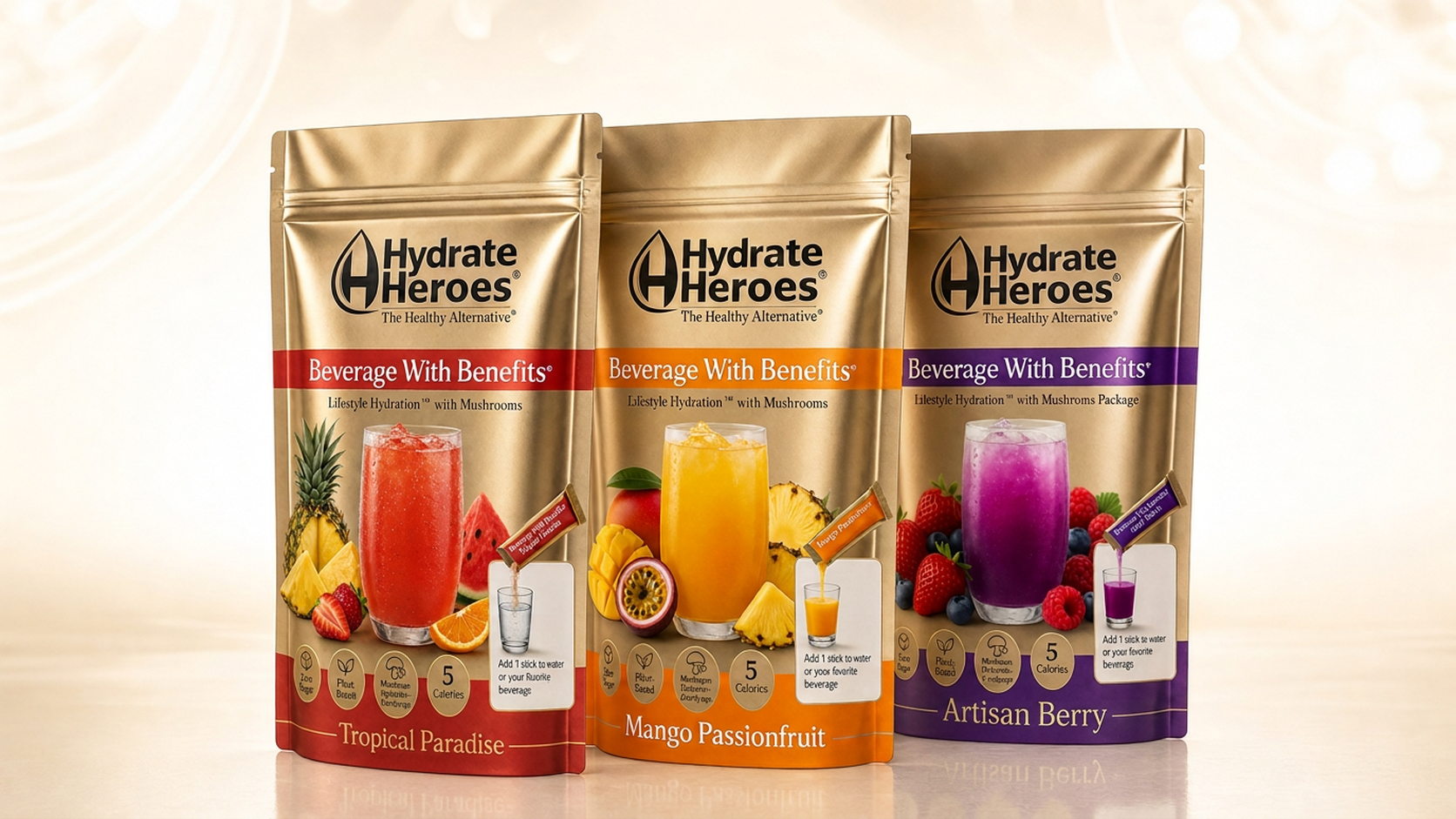
If you want to protect your body from unnecessary chemical additives, you can shop additive-free hydration that puts clean ingredients first. We built Hydrate Heroes to serve as The Healthy Alternative® to outdated, sugar-laden, and artificially sweetened beverage powders.
Choose Clean Hydration for Long-Term Vitality
Understanding these aspartame risks is essential for anyone committed to safeguarding their long-term health. The 2023 WHO classification served as a powerful wake-up call, but the ultimate decision rests in your hands every time you choose what to drink. Hydration should nourish your biology with thoughtful plant-based nutrition, natural trace elements, and real plant extracts—not burden it with synthetic laboratory compounds.
Ready to elevate your daily routine with real, clean fuel? Try our sampler pack today and experience the difference of balanced, additive-free replenishment.
Ready to upgrade your hydration?
Try The Healthy Alternative® — mushroom-powered electrolytes with zero sugar.
Shop Now →Shop this topic
Try The Healthy Alternative®
6 functional mushrooms · Zero sugar · 88mg sodium · Pure Organic Stevia. The Gold Standard in Hydration.
6-Pack Sampler
$1.67/stick
6 sticks · 2 of each flavor
- All 3 hero flavors
- Just $4.99 S&H
- 30-day money-back guarantee
- First-time buyers only
Hero Club 24-Pack
$1.25/stick
24 sticks · auto-ship
- Lowest per-stick price
- Free shipping always
- Locked-in pricing
- Cancel anytime
Just $4.99 S&H · 30-Day Guarantee · Cancel Anytime